An adaptive design system
Rebuilding Bobcat to carry LYNX’s new brand across marketing, onboarding and trading.



Situation
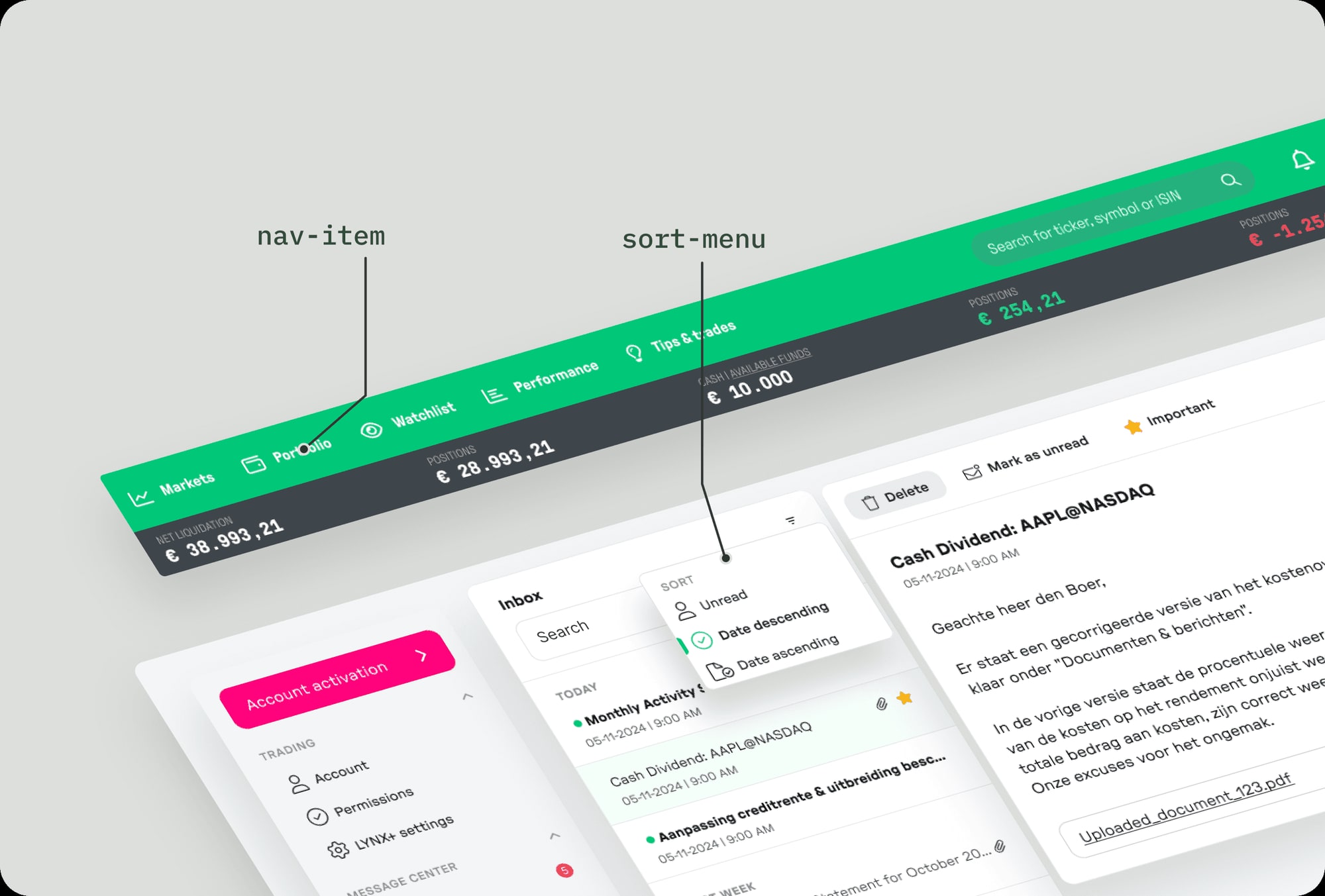
LYNX’s marketing website, client onboarding and LYNX+ trading platform were built by separate teams, each developing its own components. A full rebrand brought those differences into focus, while the European Accessibility Act added accessibility requirements to the brief. Bobcat, LYNX’s design system, needed rebuilding while the new brand was still taking shape.
Approach
Wart Burggraaf led the rebuild over roughly a year, working alongside LYNX’s in-house designers and developers. We used workshops and training to agree shared component blueprints, aligning properties and behaviour around semantic HTML. We connected components to semantic design tokens and grouped them into visual families, keeping fields and buttons distinguishable. Token Script let the rebrand team test visual directions across the system. We also tested components in three candidate frameworks against real use cases to agree a common front-end direction.
Result
The new brand could be applied without rebuilding Bobcat. Compact and Comfy density modes adapted the same components to the data-heavy trading platform and roomier marketing pages. Token Script’s logical expressions and multipliers calculated both scales from the same foundation. A shared delivery pipeline combined accessibility checks, visual regression testing, Storybook, versioning and private npm packages, giving teams a common way to build, test and distribute components and tokens. Documentation, training and a contribution process supported the handover to LYNX’s in-house team, giving new requirements a route into Bobcat as the products developed. We remain available when specialist support is needed.